Marin County Home Theater: Mill Valley, Tiburon, and San Rafael
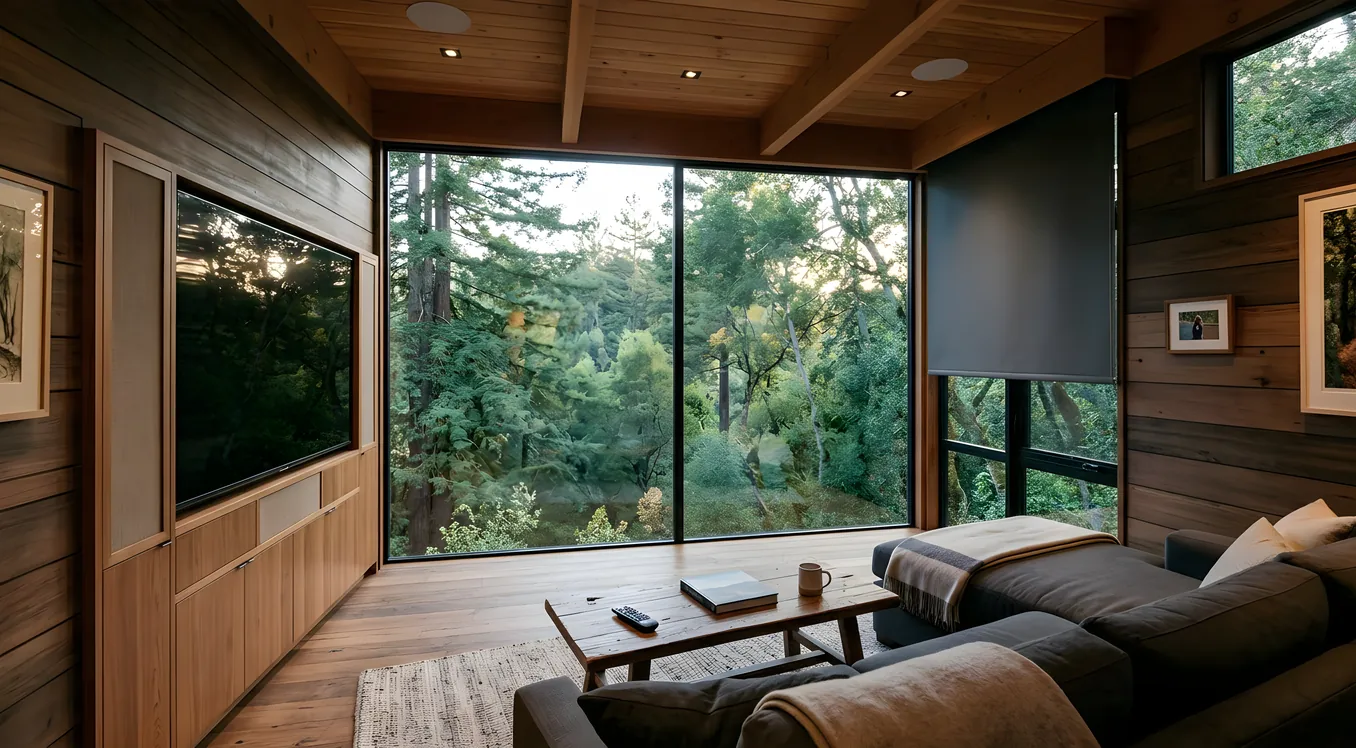
Marin County homeowners approach home theaters differently than buyers elsewhere in the Bay Area. The county’s identity runs on restraint and environmental consciousness, and that attitude carries into the theater room. The ask tends to be a system that disappears into the architecture when idle, performs at a high level when in use, and doesn’t require a dedicated room that looks like a commercial cinema. The physical realities of Marin’s built environment add their own constraints: steep hillside roads, engineered foundations, expansive glazing, and in some neighborhoods, fire zone regulations that affect how electrical and AV work gets permitted. Understanding those factors before signing a contract saves significant money and frustration.
How Marin’s Housing Stock Shapes Theater Projects
The county doesn’t have a single housing profile. Mill Valley, Tiburon, Belvedere, Ross, and Kentfield represent a different design and construction era than Novato or the flatter portions of San Rafael. That variation has real consequences for what a theater project looks like.
In the hillside communities, homes are often stacked into the terrain across multiple levels. The lower level of a hillside home is built into the grade, which means those rooms share characteristics with basements: reduced ambient light from grade-level windows, concrete or CMU perimeter walls on the uphill side, and natural acoustic separation from the main living areas above. That configuration is genuinely favorable for theater construction. A room that already has limited window exposure and structural mass on two or three walls has a head start on acoustic isolation and light control that a room surrounded by windows on a flat lot doesn’t.
Estate properties in Ross and Kentfield often include dedicated media rooms in their original construction, sized at 18 to 24 feet in depth with appropriately high ceilings. These projects typically go all the way: 4K laser projectors on a 140-plus-inch screen, multi-row seating risers, full Dolby Atmos speaker arrays, and integrated control systems that tie the theater into the home’s broader lighting and climate management. The budget range for a fully outfitted dedicated room at this tier starts around $150,000 and scales upward without a fixed ceiling depending on seating, acoustic treatment, and equipment specification.
Novato’s newer construction is closer in character to a standard suburban build: flat lots, conventional framing, media rooms sized at a living-room scale. Projects here are often more straightforward from an access and permitting standpoint, and the typical scope is a large-screen television installation with a soundbar or a modest 5.1 speaker layout rather than a projector-based dedicated room.
Mill Valley: Hillside Access Is the First Constraint
Any installer working in Mill Valley will tell you that getting equipment to the site is the first problem to solve, not an afterthought. Narrow roads, steep grades, switchbacks without adequate width for a panel van, and limited or nonexistent parking near many homes combine to make equipment delivery a genuine logistical challenge. Some driveways cannot accommodate a standard cargo van with gear loaded for a major theater installation. In those cases, installers use smaller vehicles, carry equipment by hand up stairs, or coordinate with clients to have a parking solution arranged in advance.
The same access constraints apply to subcontractors. The AV integration company may not be the problem; the electrician running a dedicated 20-amp circuit to the equipment rack or the acoustics contractor installing wall panels will face the same road conditions. Scheduling that assumes Bay Area suburban access often runs into delays once everyone is on site.
The lower-level rooms in Mill Valley hillside homes are frequently the best candidates for theater conversion precisely because they already have favorable light conditions. The challenge is that these rooms often have irregular shapes dictated by the hillside cut, structural columns that can’t move, and HVAC runs that constrain ceiling height. A room with a 7-foot-6-inch ceiling height in a hillside structure is a different planning problem than the same ceiling height in a flat-lot home, because the existing slope and the ceiling configuration often mean the projector mounting position is difficult to optimize. A competent integration firm will measure throw distances before specifying equipment, rather than proposing a projector that may not produce the intended image size in the actual room geometry.
Tiburon and Belvedere: Design Integration Over Cinema Replication
Tiburon and Belvedere homeowners generally aren’t looking for a dedicated room that reads as a home cinema. The aesthetic sensibility in this market runs toward contemporary minimalism: rooms that look composed whether the system is in use or not. Projectors that retract into the ceiling, screens that lower from a concealed soffit, speakers that install flush with the wall or disappear behind acoustic fabric, equipment racks that live in a mechanical room rather than a credenza in the theater space itself. The system needs to perform; it also needs to not announce itself when visitors walk through.
The waterfront properties in these communities have another challenge that matters more here than almost anywhere else in the Bay Area: the view. A water-facing room with floor-to-ceiling glazing framing the bay is a meaningful part of why someone bought the home. No one wants to block that permanently for theater use. The solution is motorized blackout shading that deploys for viewing and retracts completely when not in use. Quality motorized shades from manufacturers with precise light seal design can bring a room to near-complete blackout without leaving a visible gap around the frame in the raised position. The integration between the shading system and the theater control is what makes it seamless: pressing “play” on the control interface or the remote triggers the shades, dims the lights, powers the system on, and queues up the input. Pressing “done” reverses the sequence. For a homeowner who doesn’t want to manage multiple systems manually, that kind of integrated operation is the baseline expectation, not a premium add-on.
For blackout solutions on view homes, the shade specification matters more than the projector selection in many cases. A projector with strong brightness output can compensate for some ambient light; a poorly sealed shade cannot be compensated for at all.
San Rafael: Varied Housing, More Accessible Projects
San Rafael offers a wider range of housing types than the southern Marin communities, and that variation works in favor of project logistics. Flat-lot neighborhoods in the central and eastern portions of the city have standard suburban access: driveways wide enough for a cargo van, parking available near the job site, conventional framing that doesn’t require special rigging. Projects here tend to be more straightforward from an execution standpoint.
The housing stock in San Rafael ranges from 1950s ranch homes with living rooms that convert naturally into dedicated media spaces, to 1980s and 1990s construction with family rooms sized for a television wall, to more recent infill development. The common denominator is that San Rafael projects are less likely to hit the access and structural complications of Mill Valley or the design-integration expectations of Tiburon. That doesn’t mean the work is less skilled; it means the scope is more predictable.
A media room conversion in a San Rafael ranch home follows a familiar pattern: an 11-by-14-foot family room or bonus room gets a 75 to 85-inch display on the primary wall, a 5.1 or 7.1 in-wall speaker system, an AVR-based equipment stack in a ventilated cabinet, and cable management through the wall to eliminate surface runs. The Bay Area costs for a project at this scope run from $12,000 to $30,000 depending on display selection, speaker brand, and how much new wiring is required.
Environmental Considerations in Marin
Marin homeowners are more likely to ask about the environmental footprint of their equipment choices than buyers in most other Bay Area markets. The relevant considerations are real and specific.
Modern laser projectors use substantially less energy than lamp-based projectors at equivalent brightness, and they don’t require lamp replacement every 2,000 to 3,000 hours of operation. A lamp-based projector running at the same brightness as a comparable laser unit will consume 30 to 50 percent more power and generate more heat, which means more HVAC load in the equipment space. The energy difference isn’t trivial over a system with a 10-year service life.
Displays are an analogous comparison. An OLED television at typical theater viewing size consumes less power than a comparably sized LCD panel and produces no heat from a backlight. For smaller-format rooms where a large-screen television is the right choice over a projector, OLED is typically both the higher-performing and lower-energy option.
Equipment that supports standby power management and whole-system off commands (rather than leaving individual components in standby mode drawing small but continuous loads) reduces the background draw across a full equipment stack. A control system that turns everything off at a scheduled time or in response to a “goodnight” command handles this without requiring the homeowner to manually power down eight separate components.
None of these choices require compromising performance. In most cases they represent the current-generation equipment tier regardless of environmental considerations. The energy story in Marin is worth leading with because it’s accurate and because these clients respond to it, but the underlying equipment is the same equipment a performance-focused buyer would specify on pure criteria.
Fire Zone Wiring and Permitting
Parts of Marin County fall within Wildland Urban Interface fire zones, and that designation has practical consequences for theater installation work that involves any exterior penetration or new construction near the structure. The specific rules vary by jurisdiction (Marin County unincorporated, City of San Rafael, Town of Tiburon, and others each have their own interpretations), but the common thread is that fire zone requirements can affect how conduit penetrations are made, how exterior wiring is protected, and in some cases, whether a permit for electrical work near the exterior wall triggers a broader inspection of the property’s fire hardening status.
For work that’s entirely interior, the fire zone designation typically doesn’t add restrictions beyond the standard residential electrical code. The issues arise when a theater project involves exterior conduit runs (for instance, routing HDMI or speaker wire from a detached structure, or running a cable path through an exterior wall to a covered outdoor viewing area), when the project includes any modification to an exterior attic access point, or when new electrical panels or subpanels are added.
The right approach is to pull the permit before work begins, confirm which zone designation applies to the specific parcel, and have the integration firm coordinate with a licensed electrical contractor who has experience in Marin fire zone jurisdictions. An experienced local electrician will know which inspectors apply the rules strictly and which have a more flexible interpretation for interior-only theater work. Bay Area installers who work regularly in Marin will already have these relationships.
What to Expect from Installation Timelines in Marin
A theater project in Marin County should be budgeted with additional time built in for the factors specific to the county. Permit processing in Marin jurisdictions tends to run longer than in some adjacent counties. Hillside access logistics add scheduling complexity. Design-forward clients in Tiburon and Belvedere often want to review equipment specifications and finish samples in detail before work begins, which adds scope to the pre-installation phase.
For a well-scoped project with permits pulled and materials on hand, the installation phase for a media room is typically two to four days. A full dedicated theater room with riser construction, acoustic wall treatment, custom millwork, and a complex integration job may run two to three weeks on site. The planning and procurement phase before a single tool comes through the door can be several weeks to a few months depending on how many custom elements are involved and how quickly the homeowner decision process moves.
Marin clients who have done significant home renovation before will recognize the pattern: the timeline pressure is almost always front-loaded in the design and permitting phase, and the on-site execution goes relatively quickly once that foundation is in place. Starting the conversation with an integration firm three to four months before the hoped-for completion date is a realistic cushion for a complex project.
Getting the Scope Right Before the First Meeting
The highest-value thing to clarify before meeting with any integration firm is the distinction between a media room and a dedicated theater. A media room is a flexible space used for television, casual viewing, and possibly gaming or streaming, where the system performs well but the room is not exclusively configured for theater use. A dedicated theater is a committed room where acoustics, lighting, seating, and equipment are all specified around the single purpose of cinematic viewing.
In Marin, most projects land somewhere on the spectrum between those poles. The hillside lower-level room in Mill Valley might get dedicated-theater acoustics and a projector system but still function as a home office or guest space part of the time. The Kentfield estate property might have a true dedicated room with riser seating that serves no other purpose. The Tiburon media room might have a retractable screen and ceiling-mounted projector for serious viewing alongside a television that stays on the wall for everyday use.
Being specific about how the space will actually be used drives the equipment specification, the acoustic treatment scope, the seating approach, and ultimately the budget in a way that a general request for a “home theater” cannot. An integration firm that asks the right questions early will arrive at a scope that matches the actual use case rather than defaulting to one end of the range or the other.