How to Choose a Home Theater Installer: What to Look For
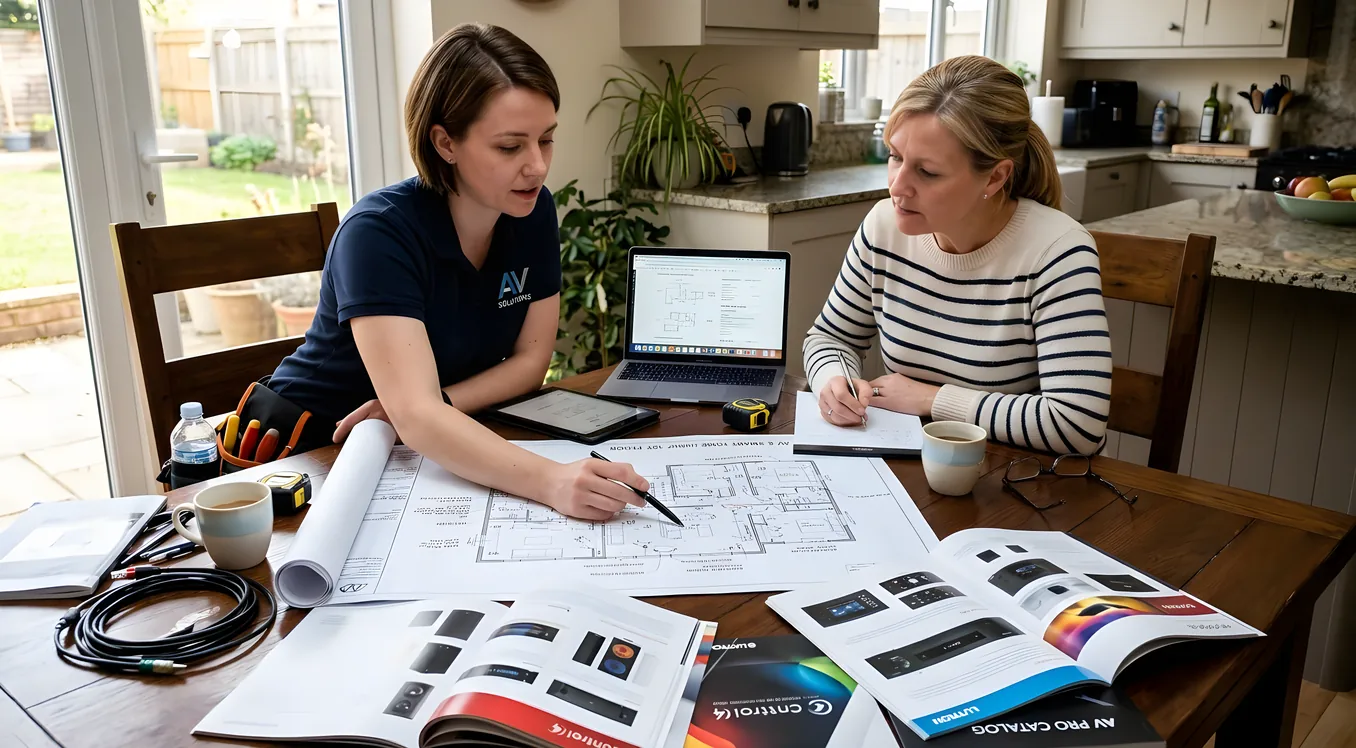
Picking the right home theater installer is the difference between a system you love using every day and one that frustrates you every time the sound drops out or the calibration drifts. The gear gets most of the attention, but the person who designs and installs it shapes the outcome far more than any individual component.
This guide covers what to look for, what to ask, and what should send you looking elsewhere.
CEDIA Membership and Why It Matters
CEDIA (the Custom Electronics Design and Integration Association) is the industry’s professional trade organization. Membership alone is not a credential, but it signals that a company takes the profession seriously enough to pay dues, access continuing education, and agree to a code of ethics.
More importantly, CEDIA membership is the gateway to the training programs and certifications that do matter. A company that has never engaged with CEDIA has likely never engaged with the industry’s evolving standards for acoustics, video calibration, control systems, or low-voltage wiring practices.
When you contact a prospective installer, ask directly: are they CEDIA members, and which staff hold CEDIA certifications? The answer tells you a great deal about how seriously they invest in their own people.
Certifications Worth Looking For
Not all credentials are equal. These four carry real weight:
CEDIA EST (Electronic Systems Technician) is the foundational certification for residential AV integrators. It covers system design, cable infrastructure, home networking, control systems, and installation practices. An EST-certified technician has passed a standardized exam and demonstrated competency beyond watching a manufacturer training video.
THX Certified companies have met performance standards set by Lucasfilm’s audio and video quality program. THX certification applies to both equipment and installers, and a THX-certified integrator has been trained to deliver the reference-quality performance the standard defines. It is relatively uncommon, which makes it a meaningful differentiator.
ISF-Certified Calibrator means someone on the staff has completed the Imaging Science Foundation’s training for professional display calibration. Getting the most out of any projector or television requires measured calibration with a colorimeter and proper software. An uncalibrated display, even an expensive one, rarely performs close to its potential. ISF-certified calibrators know what “accurate” actually looks like on a meter, not just on a showroom floor.
CTS (Certified Technology Specialist), issued by AVIXA, is widely recognized in the AV industry and covers both design and installation pathways. It is common among commercial integrators and increasingly found in residential custom installers who work on larger, more complex projects.
No single certification guarantees a great outcome, but a company with multiple certified staff has invested in training across disciplines rather than relying on one person’s experience.
Portfolio and Client References
A portfolio of completed projects is the most direct evidence of what an installer can deliver. Ask for photos of actual installations, not renderings, manufacturer stock images, or lifestyle shots from a magazine shoot.
What you are looking for in photos:
- Cable management inside equipment racks (well-managed wiring indicates discipline in the work that clients never see)
- Room acoustic treatments and their integration with the finished design
- Display and projection installations: screen placement, seating sightlines, ambient light control
- Control system touchpanels and remotes (are they clean and well-considered?)
Photos can be curated. Client references are harder to stage. Ask for two or three references from projects similar to yours in scope and budget. A high-end home cinema project is a different undertaking than a $15,000 media room, and you want references from clients who had comparable expectations and complexity.
When you call references, ask: did the project finish on schedule and on budget? How did the company handle problems that came up during installation? Is everything still working the way it was when they left, or have there been recurring issues?
Showroom Access
A company with a dedicated demo room takes AV seriously in a way that is hard to fake. Building and maintaining a showroom costs money and requires keeping the technology current. More practically, a showroom lets you hear and see the difference between a properly calibrated system and an uncalibrated one, between quality speaker placement and an afterthought layout.
If a prospective installer has a showroom, visit it before you commit. Pay attention to whether it sounds good or just loud. Notice whether the integrator can explain what you are hearing and why. A good installer can describe the room treatment choices, the speaker placement rationale, and the calibration targets they aimed for. Someone who cannot explain their own demo room will struggle to explain the choices they are making in yours.
A company without a showroom is not automatically disqualified, but the absence does mean you are relying more heavily on references and portfolio evidence to assess quality.
Manufacturer Relationships and Authorized Dealer Status
Reputable integrators are authorized dealers for the brands they sell. Authorized dealer status matters for several reasons: you get the full manufacturer warranty, access to manufacturer technical support, and firmware updates. Gray-market equipment purchased through unauthorized channels can void warranties, arrive without proper documentation, and be ineligible for support.
Ask the installer which brands they are authorized to sell and install. Major manufacturers in the residential AV space maintain dealer locators that let you verify this independently. If an installer is reluctant to discuss their dealer relationships or pushes equipment you have never heard of at prices that seem too good for the category, treat it as a signal worth investigating.
Strong manufacturer relationships also often mean access to dealer-only training, early product information, and escalation paths when something goes wrong with a component.
What a Real Proposal Should Include
Before you sign anything, a professional installer should provide a formal proposal that functions as a system design document. If all you receive is a verbal quote or a one-page PDF with a total number and a list of brand names, that is not enough to evaluate what you are actually agreeing to.
A complete proposal includes:
System design drawings: Even a basic diagram showing room layout, speaker placement, equipment rack location, cable routing, and screen position tells you the installer has actually thought through your specific room, not just pasted in a template.
Equipment list with model numbers: Not “two in-ceiling speakers” but the exact make and model. This lets you verify specifications, compare bids accurately, and confirm that the equipment is appropriate for your room size and acoustic goals.
Labor breakdown: Separate labor from equipment cost. This matters when comparing bids. Two proposals with the same total but different labor-to-equipment ratios represent meaningfully different offers.
Timeline: Installation milestones, rough-in schedule (if applicable), finish-install dates, and programming time.
Warranty terms: Who covers what, and for how long. Distinguish between the manufacturer warranty on equipment and the installer’s labor warranty on their own work.
Without these elements, you have no reliable basis for comparing one company against another, and no clear documentation if something goes wrong later. Before hiring, review your list of questions for your installer to fill any gaps the written proposal leaves.
Licensing and Insurance Requirements
Low-voltage wiring in many states requires a contractor license. The specifics vary, but the underlying logic is the same: someone running cable through your walls, attic, and equipment spaces is doing work that affects your home’s infrastructure. A license means the work is traceable and the contractor is accountable to a regulatory body.
Ask whether the installer holds the appropriate low-voltage contractor license for your state. If they are subcontracting electrical work, verify the electrician they use is also properly licensed.
On insurance, two types matter:
General liability covers property damage and bodily injury that occurs during the job. If a technician drops a 75-pound equipment rack onto your hardwood floor, you want coverage for that.
Workers’ compensation covers the installer’s employees if they are injured on your property. Without it, a worker injured in your home may have legal recourse against your homeowner’s policy.
Ask to see certificates of insurance before work begins. Any legitimate company will provide them without hesitation.
Red Flags That Should Stop You
No written contract. A handshake deal or a text message thread is not a contract. A real contract specifies scope, equipment, timeline, payment schedule, and what happens if something changes or goes wrong.
Verbal quotes only. If an installer cannot or will not put the quote in writing with itemized equipment and labor, you have no way to hold them to it.
Pushing one brand exclusively and without explanation. Professional integrators carry multiple product lines because different rooms, budgets, and use cases call for different solutions. An installer who pushes only one manufacturer for everything, without being able to explain why it is the right fit for your situation, may be chasing higher margin rather than matching the best product to your project.
No client references. A company that has been operating for more than a year should have clients willing to vouch for their work. If they cannot or will not provide references, that absence tells you something.
Equipment-only pricing with vague installation included. When labor is buried inside equipment pricing rather than broken out separately, you cannot tell what you are paying for, compare bids meaningfully, or hold the installer accountable to a defined scope of work. This structure also makes it easy to cut corners on programming and calibration, since those are the most time-consuming parts of the job.
A full breakdown of warning signs is covered in our guide to red flags in AV proposals.
The Consultation and Design Process
A professional installer should begin with a site visit. They need to see the room: its dimensions, ceiling height, existing infrastructure (HVAC vents, windows, doors), lighting conditions, and how you plan to use the space. A system designed without a site visit is designed for a generic room, not yours.
The site visit leads to a needs assessment: how you watch content, what audio priorities you have (music versus film versus gaming), how many people typically use the space, whether you want the system to integrate with a broader smart home, and what your budget ceiling is.
From the needs assessment, the installer should produce a design presentation. This is where they show you speaker placement options, screen size recommendations, sight-line calculations, and acoustical treatment recommendations. It is also when you discuss trade-offs: the difference between a 7.1 and 9.2.4 speaker layout, the pros and cons of a projector versus a large-format display, the right level of acoustic treatment for your actual room.
Good installers expect revisions. The design presentation is a starting point for a conversation, not a take-it-or-leave-it offer. If a company presents a design and resists any discussion of changes, that is worth noting.
For a more detailed walkthrough of what to expect during a professional planning session, see our guide to the AV consultation process.
How to Compare Bids Without Getting It Wrong
The most common mistake buyers make is comparing bids on total price alone. Two proposals for $40,000 are not the same if one specifies entry-level equipment with minimal acoustic treatment and two hours of calibration, while the other specifies reference-grade components, full room treatment, and a full-day calibration session.
Compare bids on specification:
- Are the equipment lists equivalent? Compare model numbers, not brand names.
- Is labor itemized, and does the scope include programming time and calibration?
- Do both proposals include acoustic treatment, or has one installer omitted it to lower the apparent price?
- What are the warranty terms on labor, and do they differ?
Price is relevant when two proposals are genuinely equivalent in scope and specification. Before that comparison is possible, you need to understand what each bid actually includes.
Making the Final Call
After portfolio review, references, a site visit, and a formal proposal, the final decision usually comes down to two things: confidence in the company’s technical competence and comfort with how they communicate.
Communication matters more than it might seem. A complex installation in your home involves decisions, trade-offs, and things that do not go exactly as planned. The installer you want is one who explains their choices clearly, surfaces problems early rather than hoping you do not notice, and treats the project as a collaboration rather than a transaction.
The best home theater systems are built by companies that take the time to understand how you actually plan to use the space and design a system around that, rather than fitting your room into a package they have already sold a hundred times.