Bay Area Building Codes for Home Theaters: Permits, Electrical, and Noise
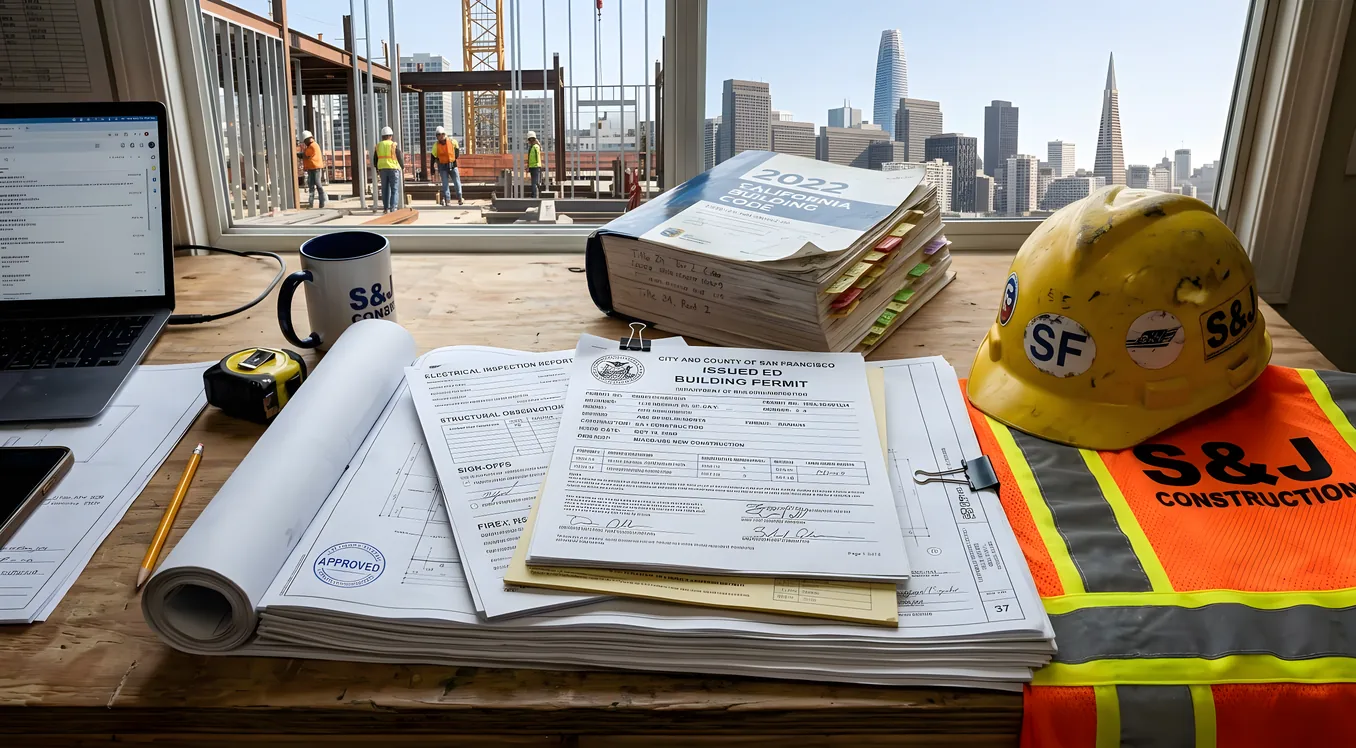
If you’re planning a dedicated home theater in the Bay Area, the permit question comes up faster than most people expect. Installing a projector and some acoustic panels? No permit needed. Running new circuits, moving walls, or converting a garage? You’re in permit territory, and each Bay Area jurisdiction has its own wrinkle on top of California’s statewide baseline. Here’s what the code actually requires and where homeowners tend to get surprised.
California Building Code vs. Local Amendments
California operates under the California Building Code (CBC), which adopts the International Building Code with state-specific modifications. Bay Area cities then layer additional amendments on top. San Francisco, Oakland, San Jose, Berkeley, and the peninsula cities each maintain their own amendment packages, particularly around seismic requirements, energy efficiency, and ADU rules.
The practical effect for home theater work: the state sets the floor, local jurisdictions often raise it. Before pulling any permit, check with your specific city’s building department. The CBC itself can be found through the California Building Standards Commission, but your city’s permit portal will tell you what additional requirements apply to your project.
When You Need a Permit
Electrical work almost always requires a permit. This is the category that catches people off guard. If a licensed electrician is adding circuits, upgrading your panel, or running new wiring, a permit is required. The permit triggers an inspection, which verifies the work meets the National Electrical Code (NEC) plus California’s amendments. Skipping this creates liability at sale time and can affect homeowners insurance.
Structural modifications require permits. Building a dedicated theater room, removing a wall to create a larger space, or adding a soundproofed room-within-a-room all qualify as structural work. This includes platform construction for tiered seating if it’s attached to the floor or walls in a way that affects the structure.
HVAC changes require permits. Adding a dedicated mini-split to your theater room, extending existing ductwork, or installing ventilation penetrations through fire-rated assemblies all require mechanical permits.
Garage conversions require permits. This one is significant because garage conversions have become a major path to dedicated home theaters in the Bay Area. See the garage/ADU section below for specifics.
When You Don’t Need a Permit
Equipment installation alone does not require a permit. Racking up AV gear, installing a projector or TV, running speaker wire, placing subwoofers, and hanging acoustic treatment panels are all unpermitted work. The distinction is whether you’re modifying the structure or its systems, not whether the equipment is heavy or expensive.
TV wall mounting generally does not require a permit, provided you’re attaching to existing framing and not cutting holes that compromise fire blocking. Projector mounting to existing ceiling structure follows the same logic, with the seismic caveat covered below.
Acoustic panels, fabric-wrapped frames, and bass traps don’t require permits. Even extensive acoustic treatment covering full walls and ceiling doesn’t cross into permit territory unless you’re building a secondary wall structure or floating floor.
Electrical Code: NEC, California Amendments, and AFCI/GFCI Requirements
California follows the NEC and typically adopts each new edition with a short lag. The 2022 NEC (adopted in California) significantly expanded Arc Fault Circuit Interrupter (AFCI) requirements.
AFCI protection is now required in virtually all living spaces, including bedrooms, living rooms, family rooms, dining rooms, hallways, closets, and similar areas. If your theater room is in finished living space, AFCI breakers or AFCI outlets are required on any new circuits. This applies to both new construction and renovations where new circuits are added.
GFCI protection is required wherever moisture is possible. Basements and garages both qualify, which matters for theater installations in those spaces. Any receptacles within six feet of a sink also require GFCI protection. For theater builds that include a bar or wet bar, plan GFCI circuits accordingly.
Dedicated circuits for high-draw equipment are code-permissible and practically advisable. Subwoofers, projectors, and power conditioners pulling significant amperage benefit from their own circuits both for protection and performance reasons. An electrician pulling permits will size these circuits correctly and specify appropriate wire gauge.
For electrical planning details including outlet placement, conduit runs, and circuit load calculations for theater equipment, that guide covers the specifics.
Title 24 Energy Efficiency and Your Lighting Plan
California’s Title 24 energy code has real implications for home theater lighting. Title 24 requires that high-efficacy lighting, meaning LED fixtures meeting California’s efficiency standards, be installed in all new construction and alterations where lighting is part of the permitted work.
For theaters, the practical impact falls on dimmer compatibility. Title 24 requires that dimmers installed under permit be compatible with the LED fixtures they control, and that the LEDs themselves meet Title 24’s standards. Theater lighting design often relies on precise dimmer control for achieving blackout or near-blackout conditions. When specifying dimmer systems, verify that your LED fixtures carry Title 24 certification and that the dimmer manufacturer lists those specific fixtures as compatible. Mismatched pairings cause flickering and reduced dimmer range.
Recessed fixtures in insulated ceiling assemblies must meet IC (insulation contact) and AT (air-tight) ratings under California code. If your theater ceiling is being built or renovated under permit, plan recessed lighting specs before the ceiling is closed.
Garage Conversions: ADU Rules and Home Theater Use
Garage conversions are where Bay Area home theater projects intersect with California’s aggressive ADU (Accessory Dwelling Unit) legislation. AB 68 and SB 13 (effective 2020) dramatically loosened conversion rules statewide, including eliminating replacement parking requirements in most cases and capping permit fees for ADU conversions.
However, the ADU rules are written around creating residential dwelling units, not dedicated media rooms. A garage converted purely for home theater use (no sleeping area, no kitchen) is typically permitted as a room addition or interior remodel rather than an ADU. This distinction matters because ADU conversions trigger different requirements around habitability (ventilation, egress, ceiling height) that a pure theater space may not meet or need.
If you do convert a garage to a theater space, expect requirements covering: insulation to meet Title 24’s residential envelope standards, fire blocking where the garage previously shared walls with living space, vapor barrier upgrades if the slab is exposed, and potentially egress window requirements depending on how the room is classified.
Consult your city’s ADU or additions permit counter before planning a garage theater. Cities like San Jose and Oakland have online pre-application processes that can answer threshold questions without a full plan set.
Noise Ordinances: City-by-City Limits
Noise regulation in the Bay Area is decentralized. Most cities set residential nighttime noise limits at the property line in the range of 45 to 55 dB(A). San Francisco uses 45 dB(A) at night. San Jose, Oakland, and most peninsula cities sit in the 50-55 dB(A) range depending on the zoning district.
Low-frequency noise from subwoofers presents the hardest compliance challenge. Standard sound level meters may not capture the full impact of sub-bass energy, and some cities have moved toward measuring in specific frequency bands as a result. If your theater will operate a high-output subwoofer system, assume that your acoustical treatment plan needs to address the envelope, not just the interior experience.
For attached homes, the practical question is less about the property line and more about impact noise and airborne sound transmission to adjacent units. See the STC section below.
The enforcement model in most Bay Area cities is complaint-driven rather than proactive inspection. That said, a neighbor complaint can trigger a formal noise assessment that measures your property against the municipal limit, and evening or nighttime sessions are more likely to generate complaints.
STC Requirements in Multi-Unit Buildings
California’s Building Code requires a minimum Sound Transmission Class (STC) of 50 between dwelling units. This applies to wall and floor/ceiling assemblies separating apartments, condominiums, and townhomes.
STC 50 is the legal minimum, not a performance target for theater use. An STC 50 assembly provides roughly 50 dB of attenuation for mid-frequency airborne sound. Subwoofer energy in the 20-80 Hz range passes through STC 50 walls relatively easily because STC ratings are measured at mid and high frequencies. This is why ADU conversions and condo theater builds need to treat low-frequency isolation as a separate design problem from STC compliance.
For serious performance, theater acoustic designers typically target STC 60+ for the room boundaries plus independent structural isolation (decoupled wall framing, floating floor, resilient ceiling hangers) to reduce impact noise and low-frequency flanking. None of this is required by code, but code minimum will likely not satisfy neighbors in adjacent units when you’re running cinema-level bass.
Fire Safety After Room Modifications
When you build or significantly modify a room, California code requires smoke detectors in specific locations. Any sleeping room requires a detector. In alterations, if the work triggers electrical permits and touches the room’s wiring, inspectors may require smoke detector upgrades to interconnected units meeting current code.
Fire blocking is the less-discussed but frequently cited item. California code requires fire blocking in wall cavities at specific intervals and at penetrations. When running conduit, speaker wire, or HDMI infrastructure through walls, fire blocking at floor lines and at any horizontal cavity breaks is required. This is one area where doing the work properly before walls are closed is far easier than correcting it afterward.
If your theater room shares a wall or ceiling with a garage, California code (Section R302.5) requires that the garage-side surface meet one-hour fire-resistance ratings, and door penetrations use solid-core or steel doors with self-closing hardware. Garage theater conversions need to address this before finishing the space.
Seismic Code: Mounting Equipment in Seismic Zone 4
California Seismic Zone 4 requirements affect how equipment is mounted in home theaters. The CBC and ASCE 7 set out requirements for non-structural component anchorage, and the Bay Area’s seismic hazard means these provisions are actively enforced.
For practical purposes: projector ceiling mounts, flat panel mounts, and equipment rack installations should use hardware rated for seismic Zone 4 or IBC seismic-compliant mounting. Most commercial-grade projector and display mounts specify seismic ratings in their documentation. Consumer-grade mounts often don’t.
The seismic mounting guide covers hardware selection, anchoring to structure (not drywall), weight ratings, and what inspectors look for in permitted installations.
Equipment racks pose a specific concern. A freestanding rack loaded with receivers, media players, and power conditioners represents a significant tip hazard in a seismic event. Racks should be anchored to the floor or wall, or use anti-tip hardware verified to hold the rack’s loaded weight.
HOA Considerations
In the Bay Area’s many planned communities and condo associations, HOA rules add a layer on top of building code. HOAs frequently restrict exterior modifications including satellite dish mounting, conduit runs on exterior walls, and equipment installed on rooftops or in shared mechanical spaces.
The FCC Over-the-Air Reception Devices rule provides some protection for antenna installation, but it doesn’t preempt HOA rules about conduit and cable management on exterior surfaces. If you need to run coax, HDMI over fiber, or network cabling from an external source, check your CC&Rs before doing exterior work.
HOAs with shared walls or stacked units may also have rules around impact noise and operating hours that go beyond city noise ordinances. Some specifically prohibit theater-level audio systems without written approval. Review your governing documents before investing in a high-output system.
Permit Process: What to Expect by Jurisdiction
Most Bay Area cities have moved to online permit portals for simple residential permits. Electrical permits for circuit additions are typically over-the-counter (same-day or next-day) in cities like San Jose and most peninsula cities. Room additions and garage conversions require plan review, which runs two to four weeks for straightforward projects.
San Francisco has historically longer review timelines and more complex requirements, particularly for older building stock. Projects in SF with structural work or garage conversions should budget six to eight weeks for permit approval at minimum.
The permit process involves submission, plan review, permit issuance, and inspections at key stages (rough-in before walls close, final after completion). Having your contractor pull permits rather than working unpermitted protects you at sale and avoids red-tag stop-work orders that freeze the project mid-build.
For projects where cost is a planning factor, the Bay Area costs page covers typical permit fee ranges, contractor pricing for theater-specific work, and where budgets tend to run over.
Getting Answers Before You Commit to a Design
Building department pre-application meetings are underutilized. Most Bay Area cities offer a pre-application or pre-submittal consultation (sometimes free, sometimes a nominal fee) where you can bring a project description and get threshold answers before paying for design drawings. For a theater build involving a garage conversion, structural work, or significant electrical, this conversation can identify permit requirements and potential roadblocks before you’ve committed to a design direction.
Your city’s permit portal is the right starting point. Look for the residential additions, electrical permits, or ADU sections depending on your project scope. California’s building code is publicly available through the California Building Standards Commission website, and most Bay Area cities post their local amendments as well.
Permits for home theater work are rarely a barrier to the project, but surprises mid-build are the most expensive outcome. Getting the permit question settled early is straightforwardly the better path.