Home Theater Flooring: Carpet, Vinyl, and Acoustic Considerations
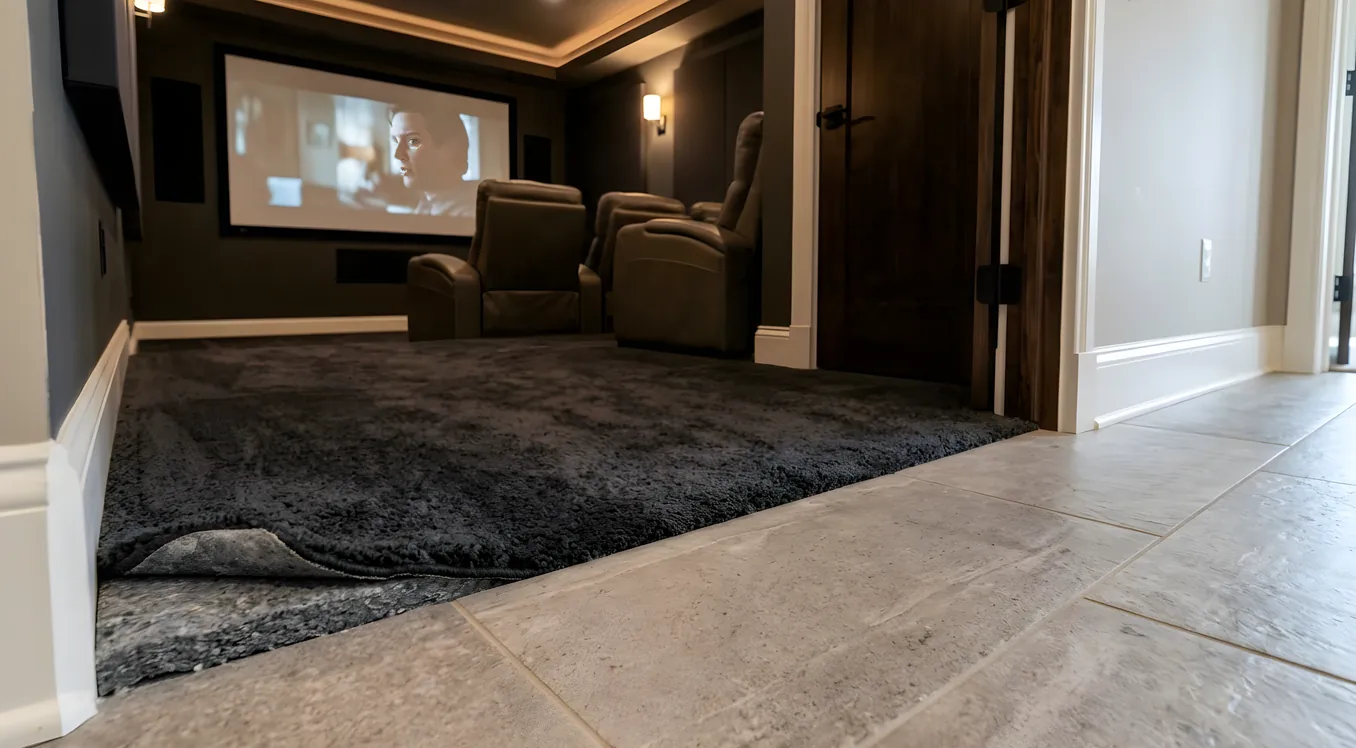
Flooring is the largest single surface in a home theater, and it behaves acoustically in ways that affect the entire room. Hard floors reflect sound back toward the listening position, adding early reflections that smear stereo imaging and thicken bass. Soft floors absorb those early reflections. The floor also sets the tone for how loud ambient noise gets between the room and the rest of the house, whether footsteps on risers become a distraction, and whether spilled popcorn stays invisible in low light.
Carpet is the correct choice for a dedicated home theater. This is not a preference. Every other flooring material creates acoustic problems that require compensation; carpet solves them directly. That said, LVP and even hardwood are workable in media rooms where the space serves multiple purposes. The key is knowing what each choice costs you acoustically and how to offset it.
Why Carpet Works in a Dedicated Theater
In a room designed around a single row or two rows of theater seating, the floor directly influences what you hear. Sound from your front speakers travels forward, hits the floor between you and the screen, and reflects upward before reaching your ears. That floor reflection arrives a fraction of a second after the direct sound and smears the stereo image. Carpet with a dense pad absorbs that reflection before it becomes a problem. You get cleaner imaging, better vocal intelligibility, and a sense that your acoustics are under control from the floor up.
Beyond the reflection argument, carpet reduces the ambient noise floor of the room. Footsteps are silent. People shifting in their seats produce no hard surface sound. If you have a second seating row on a riser, the difference between carpeted riser flooring and bare wood flooring is immediately audible the first time someone gets up mid-film.
Dark carpet in a theater also serves a practical role. Theaters use dark colors because ambient reflectance from a light-colored floor can degrade perceived black levels. A bright floor catches projector spill and reduces the apparent contrast of the image. Charcoal, dark navy, and black carpet are common in dedicated theaters for this reason, not just for aesthetics.
Carpet Pile and Pad: What to Specify
Not all carpet performs equally in a theater environment. Pile type and pad density both matter.
Cut pile is the standard specification for theater carpet. It provides uniform, low-profile surface coverage without pattern loops that can catch in recliner footrests or create uneven walking surfaces in low light. Patterned loop pile (Berber-style) works poorly in theaters on two counts: the loops snag easily and the pattern creates visual distraction when any light reaches the floor during film. Cut pile in a solid dark color is the right call.
Pad density matters more than thickness. A thin, dense pad (8-pound density at 3/8-inch thickness) performs better acoustically and underfoot than a thick, soft pad. Dense padding keeps the carpet surface stable, which matters for recliner legs and riser edges. Thick, low-density padding compresses unevenly under heavy seating and creates a bouncy, imprecise feel underfoot that becomes noticeable over time.
Commercial Theater Carpet as a Practical Option
Commercial carpet designed for cinema lobbies and screening rooms is worth considering for large dedicated theaters. Brands like Joy Carpets and Marquee produce patterned commercial carpet designed specifically for entertainment environments.
These products are engineered differently from residential carpet. The fiber systems are designed to hide stains (a real concern if your theater serves food and drinks), the patterns are chosen specifically to make spills invisible in low light, and the pile construction handles the traffic of people walking in and out repeatedly without tracking or matting. Commercial carpet typically comes in 12-foot rolls with modular tile options for rooms where layout is complex.
The acoustic performance of commercial carpet is comparable to quality residential cut pile, assuming the pad specification is similar. The durability advantage is significant if the room gets regular use from guests or children.
Luxury Vinyl Plank in Home Theaters
LVP has become the default flooring choice in home renovation, and many theater builders use it out of familiarity or because it was already installed in the space being converted. It can work in a media room context. In a dedicated theater, it creates acoustic problems that require deliberate compensation.
Hard LVP reflects floor-bounce reflections at full intensity. Unlike carpet, which absorbs energy on contact, LVP returns that energy toward the listening position, adding blur to the stereo image and reinforcing low-midrange frequencies in ways that room measurement often reveals as peaks around 200 to 400 Hz. These are not subtle artifacts. Anyone listening to a well-calibrated theater with LVP flooring and then hearing the same system on carpeted floor will notice the difference immediately.
The compensation strategy for LVP is a large area rug covering as much of the floor between the seating position and the screen as possible. The rug needs to be thick and dense enough to do real acoustic work. A thin decorative rug accomplishes nothing. A wool or thick nylon rug, at least 5 by 8 feet positioned in the primary reflection zone, makes a meaningful difference. Pairing the rug with thick underlayment underneath it adds further absorption.
If you are building on LVP and cannot change it, budget for a large quality rug and factor it into the flooring decision from the start.
Hardwood Flooring in Theater Spaces
Hardwood is the most acoustically problematic flooring choice for a dedicated home theater. It reflects sound aggressively, it transmits footstep impact noise clearly to the floor below, and it can develop squeaks under heavy furniture loads, which are uniquely distracting in a quiet screening environment.
In a dedicated theater, hardwood should be avoided. The acoustic character of bare hardwood in a rectangular room creates comb-filtering artifacts and flutter echo that no amount of wall treatment fully compensates for, because the floor is too large a surface to leave untreated. This is why commercial cinemas do not use bare hardwood in screening rooms.
In a media room or bonus room that serves multiple purposes, hardwood with substantial area rugs is acceptable. The room is not expected to perform at dedicated-theater standards, and the hardwood reads better for everyday living. The same rug guidance from the LVP section applies: the rug needs to be large and dense to contribute acoustically, not just decorative.
Concrete Subfloor in Basement Theaters
Basement conversions almost always start with a concrete slab, which requires a different approach than framed floors. Concrete is cold, acoustically live, and provides no padding or insulation without a proper subfloor system.
The standard approach is a floated subfloor: a layer of sleepers or dimple mat over the slab, followed by plywood, followed by carpet over pad. This assembly provides thermal separation from the cold slab, creates an air gap that improves acoustic isolation from the concrete, and gives you a surface that holds fasteners properly for riser construction.
For basement home theaters where sound isolation from the room above is a concern, mass loaded vinyl (MLV) installed between the concrete and the subfloor assembly adds significant airborne and impact noise reduction. MLV is a dense, flexible sheet material sold by the roll, typically in 1-pound or 2-pound-per-square-foot variants. The heavier the MLV, the more mass it adds to the floor assembly, and mass is what stops sound from transmitting through barriers. Acoustic underlayment under the subfloor plywood, such as products using recycled rubber or foam with high STC contribution, is an alternative or supplement.
The final layer over this assembly should be carpet over dense pad, following the same specifications above.
Riser Flooring and Stair Integration
If your theater includes a raised seating platform, the flooring on the riser itself and the steps connecting it to the main floor require specific decisions.
Riser surfaces should match the main floor in material. Carpet on the main floor means carpet on the riser. This is important acoustically (the riser surface is within the room’s acoustic environment and hard surfaces there will reflect) and practically (any transition between hard and soft flooring at the riser edge creates a trip hazard in low light).
The riser steps need particular attention. A carpet runner over the stair treads, secured firmly with tack strip or adhesive, provides the same acoustic benefit as floor carpet while keeping the transitions clean. The runner should extend the full width of the step and wrap the nosing to eliminate any exposed hard edge.
Riser edge lighting integrates into this construction decision. LED strip lighting recessed into the riser face, at the base of each step, serves as safety lighting during scenes when you might need to exit. The fixture channel should be set back from the step edge enough that the light source itself is below the sightline from the seating position. This prevents the LED strip from appearing as a bright point of light in peripheral vision during dark scenes. The electrical channel for these fixtures should be planned before the riser carpet is installed.
The home theater seating placement on the riser affects how much clearance you need at the riser edge. Recliners in full extension extend further behind and below the seat than standard chairs; confirm riser depth accommodates this before finalizing the riser dimensions.
Sound Isolation Under the Floor
Floor-borne sound isolation is a different concern from airborne acoustic treatment. Acoustic treatment addresses how sound behaves inside the room. Sound isolation addresses how much of it escapes through the floor structure.
For rooms on an upper floor where theater sound will travel to a room below, the isolation options are limited once construction is complete. The most effective intervention at the floor level is acoustic underlayment under the subfloor during construction, as described in the basement section above. Adding mass to the floor assembly (additional layers of 5/8-inch drywall or mass loaded vinyl between floor layers) reduces the transmission significantly.
In an existing installation where adding floor mass is not possible, thick carpet over dense pad provides measurable (if modest) improvement over bare hard flooring. It is not a substitute for proper decoupled construction, but it is the best available option in a retrofit situation.
For walls and ceilings, the isolation picture is covered in more detail in the room acoustics guide.
Cleaning Considerations
Theater flooring lives in a specific environment: low light, food and drink, occasional children, and periodic large gatherings. Cleaning factors deserve consideration alongside acoustic ones.
Dark carpet hides stains between cleanings but makes debris (popcorn, chips, small objects) hard to find in ambient light. A flashlight pass before and after screenings is a common practice in dedicated theaters. For households with children or regular entertaining, the commercial carpet options from theater-specific manufacturers offer significantly better stain resistance than standard residential carpet.
LVP is easier to clean than carpet but shows spills immediately while they are fresh. In a media room where spills can be addressed at normal lighting levels, LVP with a good rug is a practical maintenance choice. In a dedicated theater where the lights stay off during films and spills may go unnoticed, the carpet’s stain-hiding characteristic is genuinely useful.
Riser steps accumulate debris at the base of each riser face. A small gap between the step riser board and the tread allows this debris to fall through rather than pile up. This is worth specifying during riser construction.
Cost Comparison
| Flooring Type | Installed Cost (per sq ft) | Acoustic Rating | Notes |
|---|---|---|---|
| Carpet (residential cut pile) | $3 to $8 | Best | Dense pad required |
| Commercial theater carpet | $5 to $12 | Best | Stain patterns, durable |
| Luxury vinyl plank | $4 to $8 | Poor without rug | Requires large area rug |
| Hardwood | $8 to $15 | Worst | Media rooms only, with rugs |
| Concrete + subfloor + carpet | $6 to $14 | Best (with MLV) | Basement-specific assembly |
These ranges reflect installed pricing including materials and labor. Commercial carpet at the higher end includes the pattern print and commercial-grade backing. The concrete assembly cost reflects the full subfloor build, not just the carpet.
The color scheme of your theater should inform the carpet selection as early as possible, since dark carpet in charcoal, navy, or black anchors the room’s palette and affects how you specify wall and ceiling finishes.
Getting the Floor Spec Right
The sequence that produces the best outcome is to specify the floor before specifying anything else in the room. Carpet over dense pad on a proper subfloor is the baseline. Every other surface treatment, every speaker placement, every recliner position is built on top of that decision. A room with good floor treatment and imperfect wall treatment will outperform a room with bare hard flooring and elaborate wall panels, because the floor is simply too large to leave acoustically untreated.
If you are working within an existing space with flooring that cannot be changed, the rug solution is not a compromise to be embarrassed about. A well-specified large rug in the right position does real acoustic work. It is not as clean as carpet, but it is the right call over nothing.